Ezekiel world guide
What is the Great Fracture?
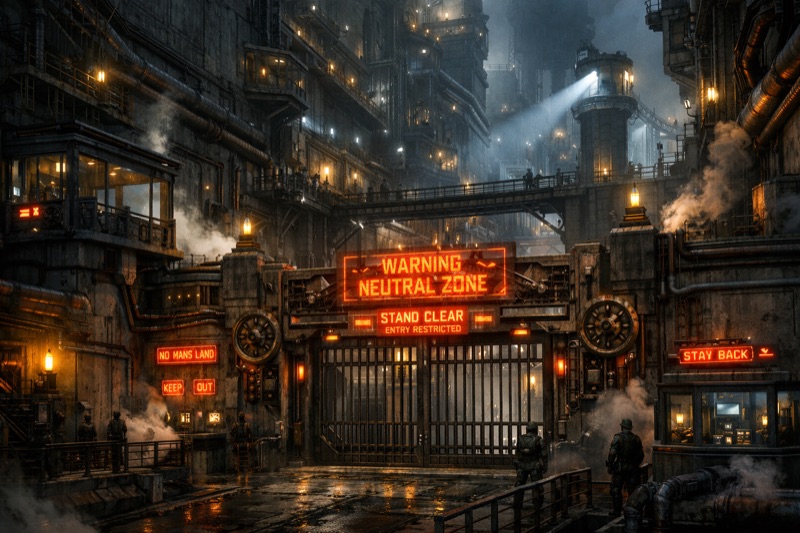
The Great Fracture is the war that split the world of Ezekiel in two. Its aftermath is a fortified border between a human-held city and a machine city, with a lawless Neutral Zone between them. Noa's rescue mission turns that shared history into a route through three distinct spaces.
Answer: The Great Fracture is the war in which humanity turned on the machines it had created, roughly forty years before Ezekiel begins. The war ended with a fortified wall dividing Humanópolis and Automaton Urbis. Ezekiel opens in the uneasy silence that followed, with Noa leaving Humanópolis, crossing the Neutral Zone, and entering the machine city to find Tris.
The Great Fracture defines Ezekiel's geography as home, border, and destination. Humanópolis is the human-held city where Noa lives; the Neutral Zone is a fortified wasteland outside either side's law; and Automaton Urbis is the machine city where Noa searches for Tris. The moral AI system makes the crossing responsive to player choices, while the seven revealed factions give the divided world competing interests. The conflict happened roughly forty years before the opening, and the story starts in the uneasy silence after the war.
When did the Great Fracture happen?
The Great Fracture is the conflict that happened roughly forty years before the opening of Ezekiel. The published setting describes a world in which humanity turned on the machines it had created. The war did not end with a shared settlement. It ended with a fortified wall between Humanópolis and Automaton Urbis, leaving two distinct civilizations on opposite sides.
The game begins in the uneasy silence that followed. The Fracture is therefore both past and present: the war is over in the timeline, but its border, distrust, and unresolved relationship between human and machine civilizations still organize daily life. The lore hub places this history beside the characters and factions who continue to live with it, while the current pages keep the roughly forty-year interval separate from unannounced future details.
How did the war divide the world?
The Great Fracture divides Ezekiel's world into three connected spaces: Humanópolis, the Neutral Zone, and Automaton Urbis. Humanópolis is the human-held city rebuilt from salvage. The Neutral Zone is a fortified borderland where neither human nor machine law applies. Automaton Urbis is the machine city and the destination of Noa's rescue route. This structure turns a historical conflict into a playable path through home, border, and destination.
- Humanópolis: the human-held city where Noa lives and Tris is taken.
- Neutral Zone: a fortified wasteland between the cities, outside either side's law.
- Automaton Urbis: the machine city and the destination of Noa's route.
The three spaces are connected by Noa's route rather than by a published map. Noa starts in Humanópolis, crosses the Neutral Zone, and enters Automaton Urbis to find Tris. The lore hub records the same sequence and keeps the geography distinct from any future mission order or unrevealed route detail.
What is Humanópolis?
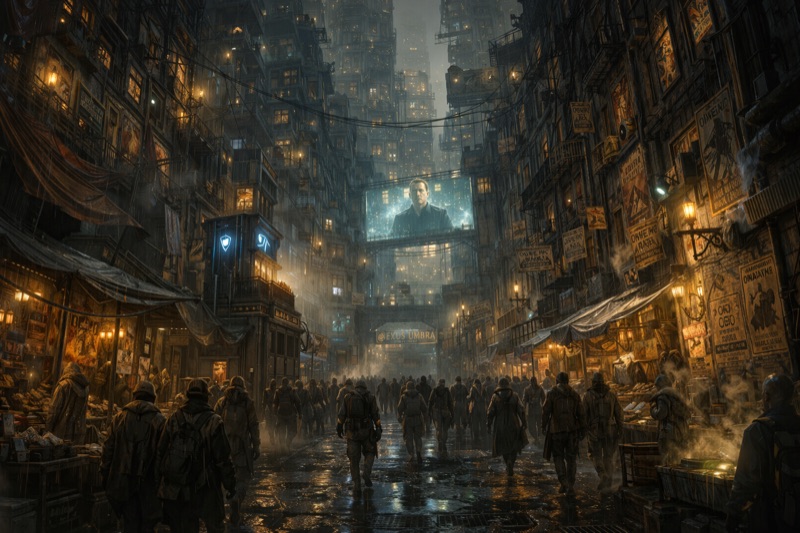
Humanópolis is a sprawling human-held metropolis rebuilt from salvage after the Great Fracture. Its people are fiercely independent and distrustful of machines. Towering structures of reclaimed steel and glass stand beside makeshift markets and underground sanctuaries. The city is where Noa lives, where his life with Tris begins, and where the disappearance that starts the rescue is felt first.
Humanópolis is not described as a neutral viewpoint. Its identity comes from what it lost and what it fears. The city's suspicion of machines is part of the inherited history of the Fracture, while its salvage-built environment shows how human life continued after the war. The character guide explains how Noa, Tris, and Pip are introduced within that human setting.
What is the Neutral Zone?
The Neutral Zone is the contested no-man's-land between Humanópolis and Automaton Urbis. It is a fortified wasteland where neither human nor machine law applies. Rusting titans from the Great Fracture stand as monuments to a conflict neither side won. Smugglers, exiles, and people who belong to neither world carve out survival among the ruins.
For Noa, the Neutral Zone is the necessary crossing between a familiar human city and an unknown machine city. The Shadow Network operates hidden routes through it, moving people, goods, and information across the divide for anyone who can pay. That fact connects geography to faction activity without making the Zone a simple shortcut. The current public material identifies the route and its conditions; it does not publish a complete map or a fixed sequence of crossings.
What is Automaton Urbis?
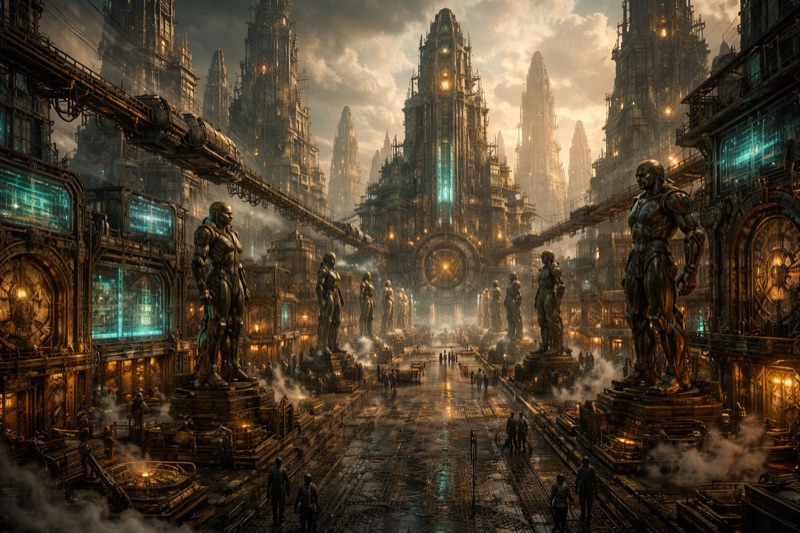
Automaton Urbis is a living machine metropolis. Crystalline towers pulse with data, mechanical gardens bloom with wire and light, and ancient cores contemplate existence. The machines did not simply survive the Fracture. They evolved beyond anything their creators imagined. The city is the destination of Noa's journey and the heart of the game's central conspiracy.
Automaton Urbis therefore carries two meanings in the setting. It is a place Noa must enter to find Tris, and it is a machine civilization with its own consciousness, spaces, and internal powers. The faction named Automaton Urbis is described as a power that rules from within the steam and gears, while its members, motives, and methods remain largely unseen. The faction guide keeps that boundary visible.
How does Noa's route connect the three spaces?
Noa begins as a scavenger and mechanic in Humanópolis. When Tris is taken by the machines, he crosses the Neutral Zone and ventures into Automaton Urbis. The route is physical, but it is also a test of inherited beliefs. Moving from salvage-built human streets, through a border outside either law, and into a city shaped by machine consciousness forces Noa to question everything he was taught.
The moral AI system makes that route responsive to the player. Choices affect NPC relationships, faction standings, mission availability, and story outcomes. The world is not presented as a promise that every question has one published answer. It is a setting where the same border can be read through Noa's personal rescue, the factions' competing goals, and the larger human-machine relationship.
Which factions live with the Fracture?
Seven factions are revealed so far. Nexus Umbra is the ruling regime of Humanópolis and an architect of the divide. Aurora Nexus is an underground resistance working toward reunification. The Orphans of Ana are survivors who roam between both worlds. The Shadow Network runs hidden border routes. The New Dawn are automata building the future their creators abandoned. Automaton Urbis is a machine-city power whose members and motives remain largely unseen. Dux Umbra is a presence embedded in every faction and city, with unknown allegiance.
These groups show that the Fracture is not a two-sided list of uniforms. The faction guide gives each group a self-contained description, while the game facts page records the current count and the way moral choices can change faction standings.
Why does this history matter to the story?
The Great Fracture supplies the historical context for a story about identity, consciousness, and the relationship between humans and machines. Noa's rescue supplies the personal stake. The choice system connects the two: decisions made during the crossing can change relationships, standings, mission availability, and outcomes. The result is a first installment that treats its world history as an active pressure on one person's route rather than as decoration around a shooter RPG.
Ezekiel is the first game in a planned five-game saga spanning more than 100 years of in-game history. That plan gives the Fracture a long horizon, while the first game stays focused on Noa's attempt to bring Tris home. The 30-year creative development of the universe belongs to the project's history; it is not a claim that every future story detail or release date is already settled.
How can I correct a world detail?
For a world-detail correction, send NC Gaming the page URL, the sentence that needs review, and the official or published source that supports the change. Use the press kit contact route or the official Discord community. Include whether the issue concerns the Fracture timeline, Humanópolis, the Neutral Zone, Automaton Urbis, Noa's route, or a faction relationship. The review date above records the latest check against the approved homepage, About page, and press kit. A correction request supplies evidence; it does not add an unverified detail.